Moravec’s Paradox: Why Robots Can’t Do Simple Tasks
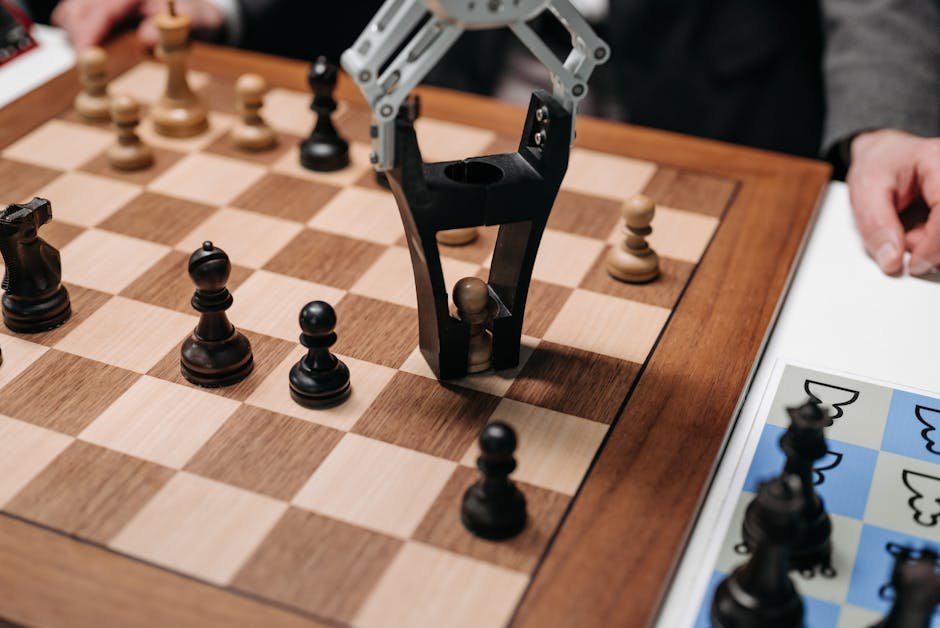
Ever wonder why AI can ace a chess grandmaster but still struggles to clear your dinner table without making a hella mess? You’re staring straight at the bizarre reality of Moravec’s Paradox. It’s this idea that flips our understanding of smarts on its head. Makes “easy” human tasks incredibly complex for machines.
We’re talking about a future where super-smart AI might be lurking. But it could be as clunky as a toddler when it comes to basic motor skills. Strange vibe, for sure. Makes you really wonder where true intelligence lies.
AI ROCKS AT MATH AND LOGIC, IT’S PROGRAMMABLE
Think about it: AI can beat the best chess players on the planet. Write poems. Make music. Ace tests, even. High intelligence stuff, right? But for computers, it means crunching numbers. Following rules. They’re built for computation.
Sounds fancy to us. But for a machine? Just fast algorithms. Super quick. It’s all about data gobbling, something AI does incredibly well. And another thing: human cognitive abilities like abstract thought and math? Kinda new for us, evolution-wise. So, machines can kinda copy it. Pretty straightforward for them.
BUT ROBOTS STRUGGLE WITH MOVEMENT AND HANDLING THINGS. THAT’S MORAVEC’S PARADOX
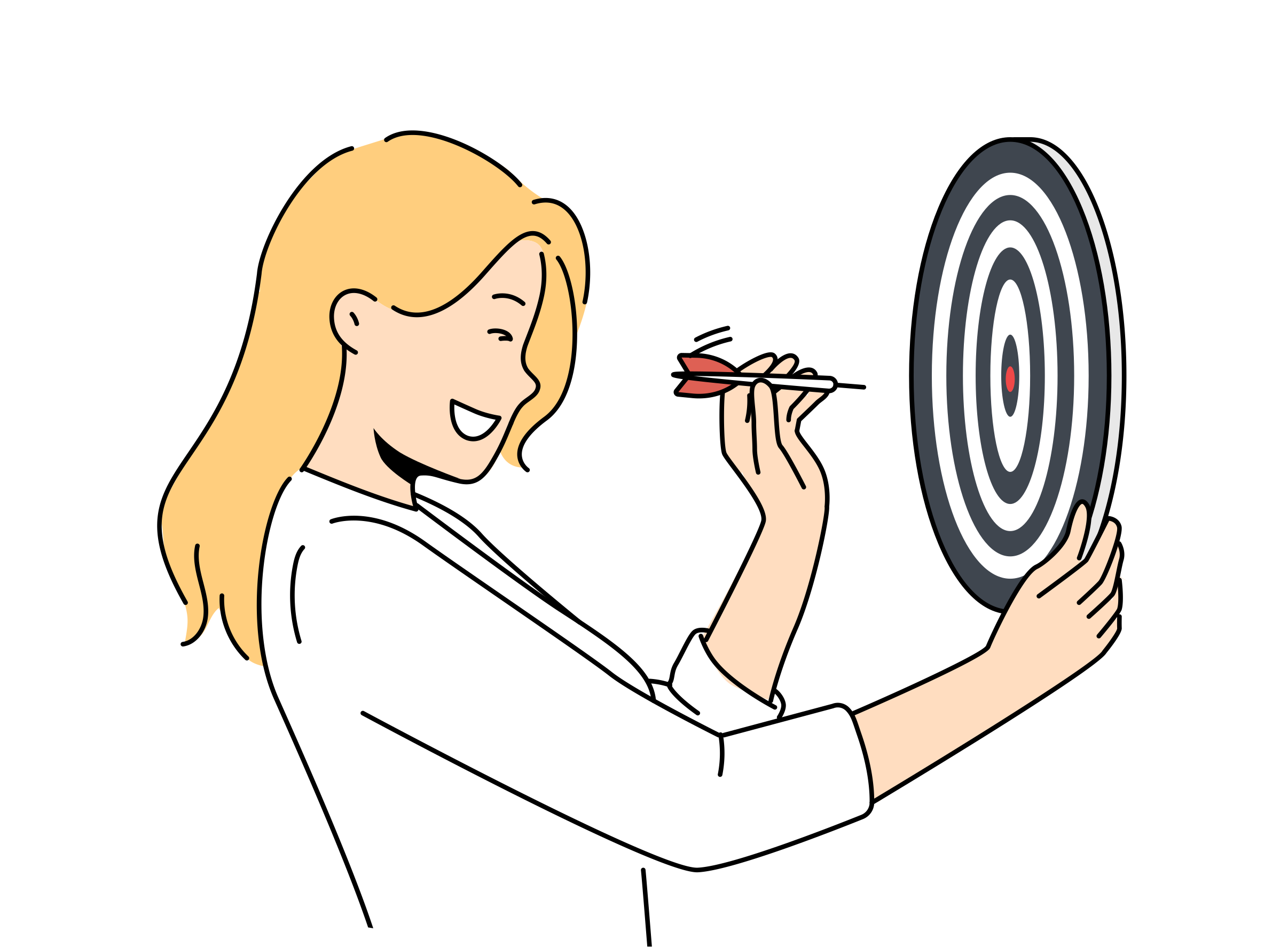
Here’s where it gets wild. AI crushing it online is one thing. But getting a robot to grab scissors? Or snag a ball at your backyard BBQ? Nah. Still sci-fi. Even with decades of development. Boston Dynamics’ Atlas? Incredible. But simple human moves? Big problem.
This is Moravec’s Paradox, right there. Walking cross a room, spotting your buddy, even trimming roses – easy for us. Our brains barely register it. For a robot? Insane brainpower needed. And really good senses. A four-year-old does it. No sweat. AI? Nearly impossible.
VERSATILE ROBOTS CAN’T HAPPEN EASILY: POWER, BRAINS, COOLING
Robots cost a ton. Obviously. But the real headaches start with power. Autonomous movement? Heavy batteries needed. Makes robots super clunky. And another thing: just picking stuff up and dropping it needs crazy processing. A truly insane amount.
All that processing? Insane heat. So, big, heavy cooling systems are a must. Makes robots huge. Plus, the problems robots are built for? They shift. Even before the robot is ready. A wild goose chase, this whole thing.
THE STUFF THAT MAKES US HUMAN (LIKE RECOGNIZING FACES) IS HARDEST FOR AI
Humans just do stuff. Spot a friend across a mob. Hear a voice in a loud room. Walk through a kitchen without smashing plates. A four-year-old? Crushes these tasks. But for AI? Super hard engineering. Some of the trickiest challenges around.
Not just processing power. Not at all. It’s seeing the world. A total mess sometimes. Because millions of years. Bodies and brains working as one. Made these “simple” perception skills perfect. We barely get it. How to program that?
MANUAL SKILLS MIGHT BECOME IMPORTANT AGAIN AS AI TAKES OFFICE JOBS
A lot of people are freaking out about AI stealing office jobs. Analysts, data input, even stuff like art. And yeah, that could happen. But some smart folks are saying, “Hold up!” The Industrial Revolution brought new jobs. AI-age? Get ready for a weird spin.
Don’t write off those hands-on skills just yet. People are starting to think jobs needing delicate hands, physical smarts, and dealing with our unpredictable world – like gardening, fixing pipes, legit massages – those might get super important. Because robots struggle there. Talk about flipping what “skilled labor” means on its head.
HUMAN-LIKE ROBOTS PLUS AI COULD UNLOCK GENERAL AI
Jensen Huang, big boss at Nvidia, figures robots are the next big thing. AI makes text, pictures, videos. So, movement? Why not? Movement understood. Autonomous motion next. And that’s where humanoid robots fit in.
Brains aren’t everything. Our smarts? Tied right into our bodies. Our physical design handles energy and movement perfectly. Machines? Not so much. Still a struggle. So, copying our body design with AI-powered human-like robots? That might actually be the big break for real AGI. Intelligence that genuinely gets the world around it. Like us.
OUR INTELLIGENCE AND BODIES EVOLVED TOGETHER. WE TAKE IT FOR GRANTED
We sometimes think brains are all that matters for smarts. Just disembodied thought. But our very own intelligence? It’s seriously molded by our bodies. Brains and bodies? Grew up together. Billions of years. Perfectly optimizing energy. Making complex moves. Absolutely wild.
Imagine a totally in-sync orchestra. A perfect show. Take away the instruments – aka our bodies – and the conductor, our brain, doesn’t mean much. Our human bodies, refined over ages, do the “simple” things – walking, seeing, hearing – with unbelievable smoothness. Robots can only wish. So, because of all this, Moravec’s Paradox stings. Our “unconscious” abilities? Those grew right alongside our bodies. Making them genuinely impossible for AI right now. Until a machine can perfectly trim your rose bush out back? We’re a long, long way from robots doing absolutely everything. Just chillin’.
Frequently Asked Questions
Q: What is Moravec’s Paradox in simple terms?
A: Okay, so like this: Robots struggle big time with basic human stuff. Walking, spotting faces, that kind of movement. But real brainy problems? Chess, math? Super easy for them.
Q: Why do robots struggle with “simple” human tasks?
A: Because humans do them without even thinking. Millions of years of evolution shaped our bodies and brains. Perfected perception and movement. Trying to copy all that efficiency and sensorimotor complexity in robots? Needs insane processing power. So much energy. Fancy cooling, too. A giant pain to engineer.
Q: Could AI eventually overcome Moravec’s Paradox?
A: Yeah, probably. Guys like Jensen Huang from Nvidia think we can. Better robotics, especially humanoid ones, might let machines copy how we humans are built for efficiency. So, stick AI into physical bodies that really work in the real world. That could be the secret sauce for AGI. For learning those “easy” human skills.