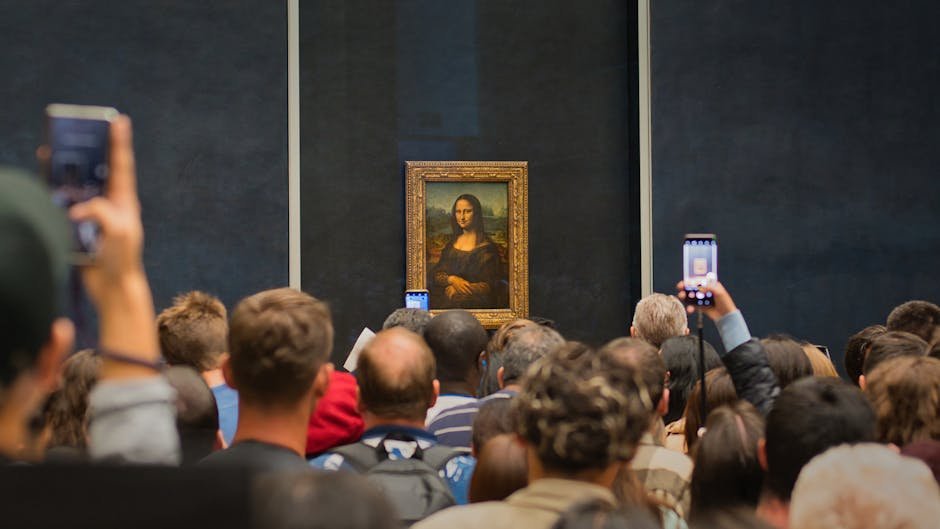
Da Vinci’s Genius: A California Take on an Old Master
So, what makes someone the GOAT in their field? You ask the real legends – an artist, a musician, or a Nobel scientist – and they often drop something unexpected. One might shrug, “Me, a genius? Nah. Just insanely curious.” Another one? “Yeah, I don’t quote fancy books. But I’ve got something way better: hands-on action.” That kind of raw curiosity, blended with real experience, that’s what made truly iconic figures. Like Leonardo Da Vinci. Even out here in California, with our own mix of tech and art, we’re still tripping out over how much he did. What a legend.
Da Vinci Combined Everything: Art, Science, Engineering. That Was His Vibe
Not just an artist. Da Vinci was a whole brain universe. Check out the Mona Lisa’s grin. The eyes that just follow you. Or the shifty posture of the traitor in The Last Supper. Behind all that? A deep knowledge of anatomy. Engineering stuff. Science, technology, and architecture too.
He soaked up ideas from everyone. Even another Renaissance brainiac, Leon Battista Alberti, who famously said: an artist needs to see the human body from the inside out. Bones first. Then muscles. Skin. Clothes eventually. But Da Vinci didn’t just look around. He saw things. Broke ’em down, figured out how they really worked, then brought them back to life on canvas or paper.
His Anatomy Hobby (Including Cutting People Open) Totally Changed His Art
Think about the Mona Lisa again. That gaze? Pure no guesswork. Because Da Vinci meticulously documented human anatomy for years. He did direct observation. And another thing: extensive dissections. He knew which muscles moved those lips. What was under the skin. How the eye actually worked.
His famous Vitruvian Man drawing? Totally inspired by ancient Roman architect Vitruvius. It’s more than just an image. It’s a perfect snapshot of his human-first philosophy. He seriously thought perfect human body proportions could even shape buildings. He kept going, beyond just looking. Thirty human bodies. Dude. He drew everything. Cross-sections of skulls. Even the crazy workings of the human heart. These weren’t just science notes. They were masterpieces. Art plus hardcore science. And his surviving notes — over 6,000 pages of them — estimates suggest that’s only a quarter of what he originally filled! Crazy.
Da Vinci Just Loved to Learn, Always Chasing Knowledge, Which Led to Wild Inventions. Way Ahead of His Time
Da Vinci’s notebooks are bonkers. Designs for machines. Centuries too early. Imagine:
- A water-powered auto-carrier, designed to haul a million tons of dirt per hour.
- A tank that could fire everywhere.
- Early ideas that look like autonomous vehicles. Or maybe an early robot.
And an obsession with flying. He straight-up copied birds. His notes are packed with bird anatomy studies. And designs for everything from a kind of helicopter to attachable wings. He even drew a parachute! So he pretty much saw the modern world before it showed up. Kicked off ideas for so much of our engineering today.
Rich Folks Like the Medici Family Fuelled Renaissance Artists. Da Vinci Got That Help
Talent needs money. And for Da Vinci, that juice generally came from powerful patrons. The Medici family, especially Lorenzo the Magnificent, they were key players. Original venture capitalists of art, basically. Pumping their cash from other businesses into supporting artists. And getting new ideas out there.
Lorenzo de’ Medici didn’t just give artists money. No. He hooked them up. And it was Lorenzo who introduced Da Vinci to Ludovico Sforza, the Duke of Milan. This big meeting wasn’t for a painting. But Da Vinci got sent to show off a musical instrument. Clever excuse, right? To put his all-around genius on the world stage. It worked. Da Vinci spent 17 years under Sforza’s patronage in Milan. Allowed his mind to just go wild. His talents exploded on countless projects. Even if a lot of them remained gloriously unfinished.
Anatomy Knowledge? Clear as Day in His Art, Like Mona Lisa and The Last Supper. That’s Why They’re Still Huge
Da Vinci’s genius wasn’t just about making pretty pictures. It was about packing his art with profound realism. And emotional punch. All thanks to his science brain. The Last Supper perfectly captures that shocking moment. When Jesus reveals someone’s gonna betray him. Each apostle’s reaction – shock, anger, questioning, accusations – it’s stunning. Incredible psychological insight. Jesus himself, right in the center, arms spread, projects both sacred power and calm acceptance. While Judas? Holding his money bag, kinda set aside in the shadows. It’s a moment frozen. Almost like a photo. Yet with so much deep emotional truth.
And the Mona Lisa? Its power comes from that mystery smile. And those eyes that just seem to follow you. This isn’t a trick of light. It’s his masterful sfumato technique combined with serious studies of perspective. And the human visual system. Because Da Vinci totally understood the muscles of the lips. And the mechanics of the eye. It makes the portrait feel alive. She looks like she’s about to start laughing! Truly hella impressive.
Da Vinci Even Designed a Massive Bridge for Istanbul. Never Built. But So Smart
One of Da Vinci’s wildest projects – and sadly, never happened – was a bridge for Istanbul’s Golden Horn. Tucked away in his Codex Atlanticus. A letter from 1502 shows his idea to Sultan Bayezid II: A bridge 360 meters long, 24 meters wide, and 40 meters high. Across the strait. One single, huge arch.
This was a colossal undertaking for the era. Designed to laugh off storms. And earthquakes. Ships could pass freely below. Sultan Bayezid II, probably freaked out by the scale and the bill, never approved it. But in 2019, folks from MIT proved it. Da Vinci’s original design was totally doable. They could’ve built it with the materials he had back then. Boom. Major reminder of his vision. Way past anything his contemporaries could even dream of.
His story, well, it’s about an unquenchable thirst for knowledge. An unschooled genius. Devouring everything life gave him. Documenting the world with a pen. Always. Da Vinci didn’t just observe. He understood. He didn’t just imagine. He designed. We’re still catching up.
FAQs
Q: Why was Leonardo Da Vinci considered lucky to be born out of wedlock?
A: Renaissance Italy rules: sons traditionally followed their father’s job. But Da Vinci? He was born outside of marriage. So he wasn’t stuck with that expectation. Didn’t have to be a notary like his dad. This freedom let his dad recognize his budding art talent early. Pushing him towards art instead of a family trade. Lucky break.
Q: What was the “sfumato” technique that Da Vinci used?
A: Sfumato is a painting move. Creates real soft, hazy blends between colors and tones. Often blending them so subtly. No harsh lines. Da Vinci used it to give figures and objects this soft, almost smoky vibe. Most famously? The mysterious smile and eyes of the Mona Lisa. Total Da Vinci signature.
Q: Did Da Vinci complete all his projects?
A: Nah. Not even close. Despite his seriously strong work ethic, Da Vinci had way too many interests. And an intense curiosity. He’d often just leave projects unfinished. New ideas would always grab his attention. Seventeen years in Milan under Ludovico Sforza? He only finished about six projects. Max. Lots of his groundbreaking designs. And scientific studies. They just stayed in his notebooks. Unbuilt or unpursued.