Dunbar’s Number: Why Your Squad Has a Limit
Ever look at your phone contacts? Wildly long, right? But your actual go-to people? Just a few. What’s up with that? Or how about your social media feeds – all epic stuff, yet you feel, well, less connected? Good reason. It’s got a name: Dunbar’s Number. And because of it, even in our super-connected times, relationships often feel kinda stretched.
Dunbar’s number suggests humans can comfortably hold about 150 stable relationships
So, rewind to the late 1980s. Long before anyone even knew what a Twitter vibe was. This anthropologist, Robin Dunbar, he was checking out primate brains. He found a cool pattern: how big a primate’s neocortex was (that’s the social part of the brain) went right along with how big their typical group was. Bigger brain? Bigger group.
Here’s the kicker. Dunbar slapped that same math onto humans. Surprise! Our brains are ready for about 150 stable social connections. That’s it. Just 150.
Initially, folks were like, “Nah.” But history proved him right. Ancient hunter-gatherer bands, typical village sizes, military units, even old medieval communities – they all hovered around 150 members. Take the Hutterites, for instance; they split their groups once they hit 150. Keeps things harmonious. Because it’s not about knowing 150 random faces. It’s about those 150 people you actually care about, the ones you could totally stop and chat with for ten minutes if you bumped into them at the local coffee shop.
Your social connections come in layers: 5 closest people, 15 friends, 50 good pals, and a wider group of 150
Think about your social world. Like an onion. Our brains just naturally sort people into layers.
At the very core, you’ve got about five people. Your absolute rocks. Closest family, your best buddies, the key players you couldn’t live without. And another thing: this five-person thing is true for pretty much everyone, everywhere.
Step out a bit, and you hit your “sympathy group.” We’re talking maybe 15 folks. These are solid friends and family. The people you’d actually hit up in an emergency.
Beyond them? A circle of about 50 good friends. People you see regularly. Co-workers you like. A wider social group. Birthday invites? Definitely.
Then, the big crew: 150. That’s your outer social network. People you know, recognize, and are generally chummy with.
And get this: the math. Each layer is roughly three times bigger than the one inside it. It’s like our brains use a secret formula for sorting who’s who.
Keep in mind: relationships need time and energy. Ditch the contact, and they fade
But heads up: these layers aren’t rigid. Staying tight with your core five? That’s usually
multiple times a week. Your next 15? Maybe once a month. The 50-person crew? A few times a year. Super important, this rhythm. Don’t keep up that contact, and your brain starts sending people outwards.
During the pandemic, lots of friendships just felt like they faded. It wasn’t just random. Your brain was simply doing its job, pushing those neglected connections to the edges until they slipped completely out of your active friend circle. It’s a natural thing. Yeah, can hurt sometimes. Relationships are like plants. They just need watering.
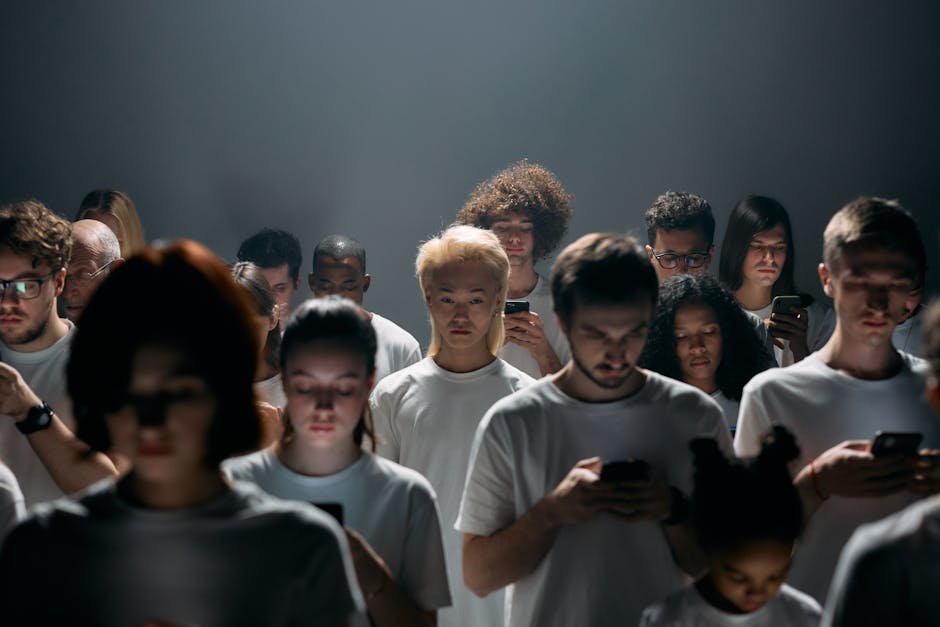
Social media means tons of connections, but often, they’re not deep or truly meaningful
Here’s where modern life messes with our old-school brains. We scroll through feeds with hundreds, even thousands, of “friends.” But your brain, that ancient supercomputer, is still running on that primitive, layered software.
Our digital lives? A total highlight reel. Vacation pics, promotions, wedding videos. But we miss the real story: the headache of getting that promotion, the struggles behind that trip, the sheer chaos of wedding prep. It’s like watching a movie trailer, not the whole darn flick. This constant stream of perfectly staged lives can make our everyday reality feel a bit dull. Our social brain just wasn’t built to process the best moments of so many people. Not ready for all that info.
Your brain’s reward system acts differently when you chat with close contacts versus faraway people
That good feeling you get when you genuinely connect with someone who gets you? Yeah, that’s your brain’s reward system kicking into gear. And science says it’s not the same depending on who you’re talking to.
See a photo or hear from someone in your inner circle? Your brain feels good. Powerful. Satisfying. But that activity steadily fades out as you move through your social layers. A casual like from a distant acquaintance just doesn’t hit the same as an actual, heartfelt call from your best friend.
Apps are trying to copy the brain’s social layers with “close friends” lists and special notifications
So, the folks who build these apps aren’t stupid. They notice the weird disconnect. Instagram’s “Close Friends,” WhatsApp’s chat-pinning, Twitter’s “important notifications” — they’re all efforts to digitally copy those ancient social layers our brains always wanted. They want to help us cut out the junk.
But even with AI trying to guess what’s important, it’s not a perfect fix. Remember that daily, weekly, monthly rhythm? Digital tools can keep us aware, sure, but they don’t really nail the actual feeling of true connection. Still, they push on.
Real connections need face-to-face time, including all those nonverbal cues, which digital chats often lack
Zoom, texts, DMs, live streams – they help, absolutely. But during the pandemic, many of us realized something big was gone. Our brains spent eons getting ready for face-to-face interaction. The little things. Key. Micro-expressions. Eye contact. Tiny shifts in voice tone. Body language. These are the basic stuff of real social bonds.
Digital interactions, while super convenient, often ditch these super important hidden messages. Make it too simple, this complex dance of human connection. Leaves us feeling less connected, ironically, even when we’re “communicating” all the time. Oh, and every connection can’t be deep. Or shouldn’t be. That’s a thing tech often misses.
So, what’s next for technology? AI, augmented reality, virtual reality are hot, hot, hot. Labs are going nuts with it. VR headsets tracking eye movements. Avatars showing our tiny face moves. AI analyzing our tone for emotion. Even brain-computer interfaces are trying to beam over feelings, not just ideas. Tech wants virtual connections to feel real.
But does more connection actually mean better relationships? Our history hints that while tech tweaks our limits – fire gave us bigger brains, writing saved knowledge, the internet made the world tiny – we always circle back to that ancient social architecture. There’s a quiet wisdom in Dunbar’s numbers. Maybe our brains are trying to tell us something vital: being human isn’t about endless connections; it’s about meaningful ones. That’s a chill thought worth holding onto.
Frequently Asked Questions
What’s Dunbar’s Number all about?
Dunbar’s Number talks about your brain’s limit. How many stable social relationships can one person truly keep up with? It suggests around 150 people.
How does social media mess with our social circles?
Social media lets us connect with thousands of people, but our brains are still wired for a much smaller number of meaningful relationships. This creates an overwhelming feeling, and connections get thin. Digital chats often lack the key unspoken signals you get face-to-face.
Why do some relationships feel closer or stronger than others?
According to Dunbar, our social circles are in layers. Different levels of emotional closeness and time investment. Your inner circle (like 5 people) needs you all the time. But the outer layers (up to 150 people) need less frequent contact. Relationships that don’t get regular attention may naturally weaken and just fade to the background of your social network.