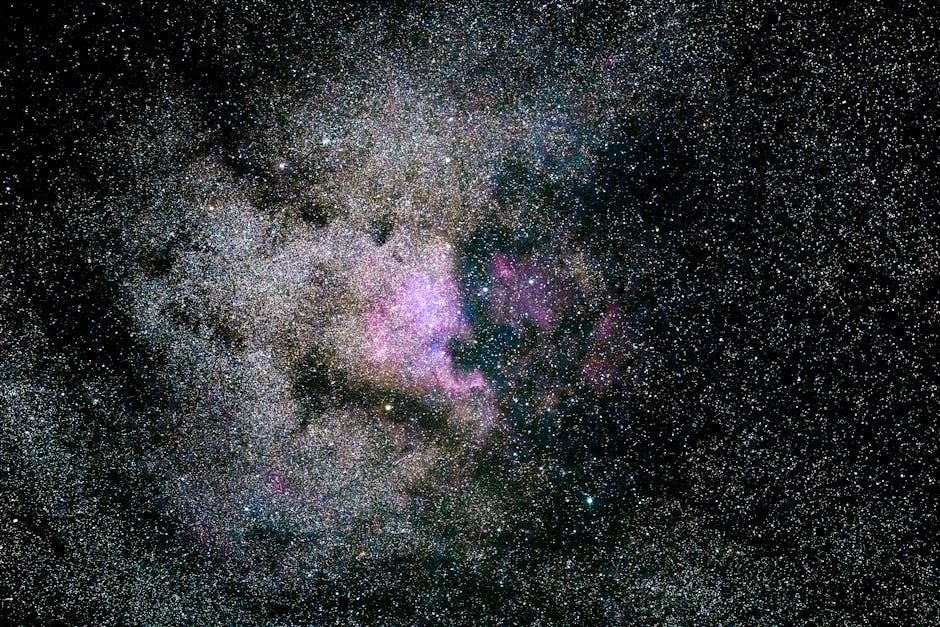
Rogue Stars: What Even Are These Things?!
Think the universe is all neat orbits and predictable paths? Think again. Out beyond the streetlights, under that vast California night sky. A whole cosmic drama is happening. I’m talking about rogue stars. Just celestial bodies that decided to ditch the galactic rulebook. They’re the cosmic rebels. Spinning out of control across the huge expanse. Pretty wild idea, huh?
Normal stars, like our very own Sun, follow a pretty standard path. They orbit their galaxy’s center consistently. Billions upon billions of them, all in line. But not these guys. Rogue stars are just… different. They don’t just stray. Instead, they’re often rocketing through space. Super fast. Sometimes even fast enough to leave their home galaxy entirely, just gone into the intergalactic void.
Rogue Stars Play by Their Own Rules
Imagine billions of stars. Each one gracefully spinning in its cosmic dance around our galaxy’s core. Our own Milky Way? It’s got around 200 billion of them. Every star has a set path, a gravitational spot it’s supposed to stick to. But then there are those… outliers.
These aren’t just stars on a slightly different path, nope. What I mean is, these stars hit such wild, crazy speeds. They literally mess up the whole orderly system. Just disrupt everything. Some even break free. Becoming intergalactic nomads. And another thing: astronomers have actually spotted over 20 of these high-speed runaways so far. They exist. And their stories are just bonkers.
Guess What? Any Star Can Go Rogue
So, what kind of star gets to jump that galactic fence, anyway? Here’s the shocker: any kind. Seriously. No special type. You might think just the biggest, most explosive stars get booted, but nope.
Whether it’s an everyday star like our Sun, a huge supergiant, a super dense neutron star, or even a tiny white or brown dwarf, any celestial body can suddenly find itself on a one-way trip to nowhere. The universe? It just doesn’t care who gets swept up in the chaos.
What Actually Kicks a Star Out of Orbit?
So, how does a star go from just chilling in its orbit to a high-speed intergalactic nomad, huh? There are two main reasons for these cosmic boot-outs.
The first big reason: supernova explosions. The universe, it’s not always neat. Most stars, turns out, aren’t solo acts like our Sun. They often hang around in multi-star systems—pairs, trios, even foursomes – sometimes with some truly massive stars chilling out. When one of these giants runs out of fuel and explodes in a supernova? Whoosh. It’s not just lights out for that star. The sheer force from this massive blast can totally unstable the other stars hanging around, sending them flying off their original paths. At insane speeds. These are the really fast ones. In 2015, astronomers at the University of Utah even found one, called HVS1, just tearing through space at over 1.6 million kilometers per hour. That’s fast enough to ditch the galaxy entirely.
The second major reason? Galactic fender-benders. Just think, enormous cosmic traffic accidents. Sometimes, galaxies themselves crash, or smaller satellite galaxies get all mixed up with bigger ones. And another thing: The Milky Way, turns out, has a pretty busy neighborhood. For instance, the Sagittarius Dwarf Galaxy, way smaller than ours, has swung too close to the Milky Way multiple times over the past few hundred million years.
These gravitational interactions? They’re like planet-sized slingshots, but on a massive scale. Stars in our Milky Way’s outer halo, you know, those caught in the messy gravity from these near-misses, can get violently flung off their steady orbits. Just leaves them wandering around. Aimlessly. Uncontrolled. For millions of years. But don’t you sweat it, though. This galactic chaos is happening way out where it won’t mess with our chill spot here on Earth. That Sagittarius Dwarf is expected to be fully swallowed up by our galaxy in another 100 million years or so. Basically, tidying up the cosmic mess.
Our Sun: Will It Ever Go Rogue?
So, could our Sun ever go rogue? Could it just wake up one day, decide to peace out, kick off its orbit, and become a runaway star? The short answer? Highly unlikely.
For our Sun to escape its steady path, it would need a seriously huge kick. I mean, we’re talking about either a nearby supernova explosion powerful enough to just knock it totally off course. Or another star making an uncomfortably close, nearly catastrophic pass. Luckily? Neither of those is expected in our cosmic neighborhood. Our Sun is a stable, solitary star. Far from any predicted crazy stuff. We can all just breathe a sigh of relief.
FAQs (Quick Hits)
So, what IS a rogue star?
They’re stars that just don’t stick to the normal, predictable orbital paths around their galaxy’s center. Often, they get sped up to super high velocities. And sometimes? They even leave their galaxy completely, heading out into intergalactic space.
What really makes a star go rogue?
Okay, there are two big reasons. First, massive supernova explosions in multi-star systems. These can violently spit out companion stars. And the other thing? Gravitational shenanigans. Or “collisions” between galaxies. Or maybe a big galaxy and its smaller friends. This kinda stuff can slingshot stars right out of their orbits. Wild, right?
Has our Sun ever done this, or will it?
No way. Our Sun has not been a rogue star. And it’s super unlikely to become one. There are no forecasted supernova explosions or super-close stellar encounters anywhere near our solar system. Nothing strong enough to knock our Sun out of its stable orbit.